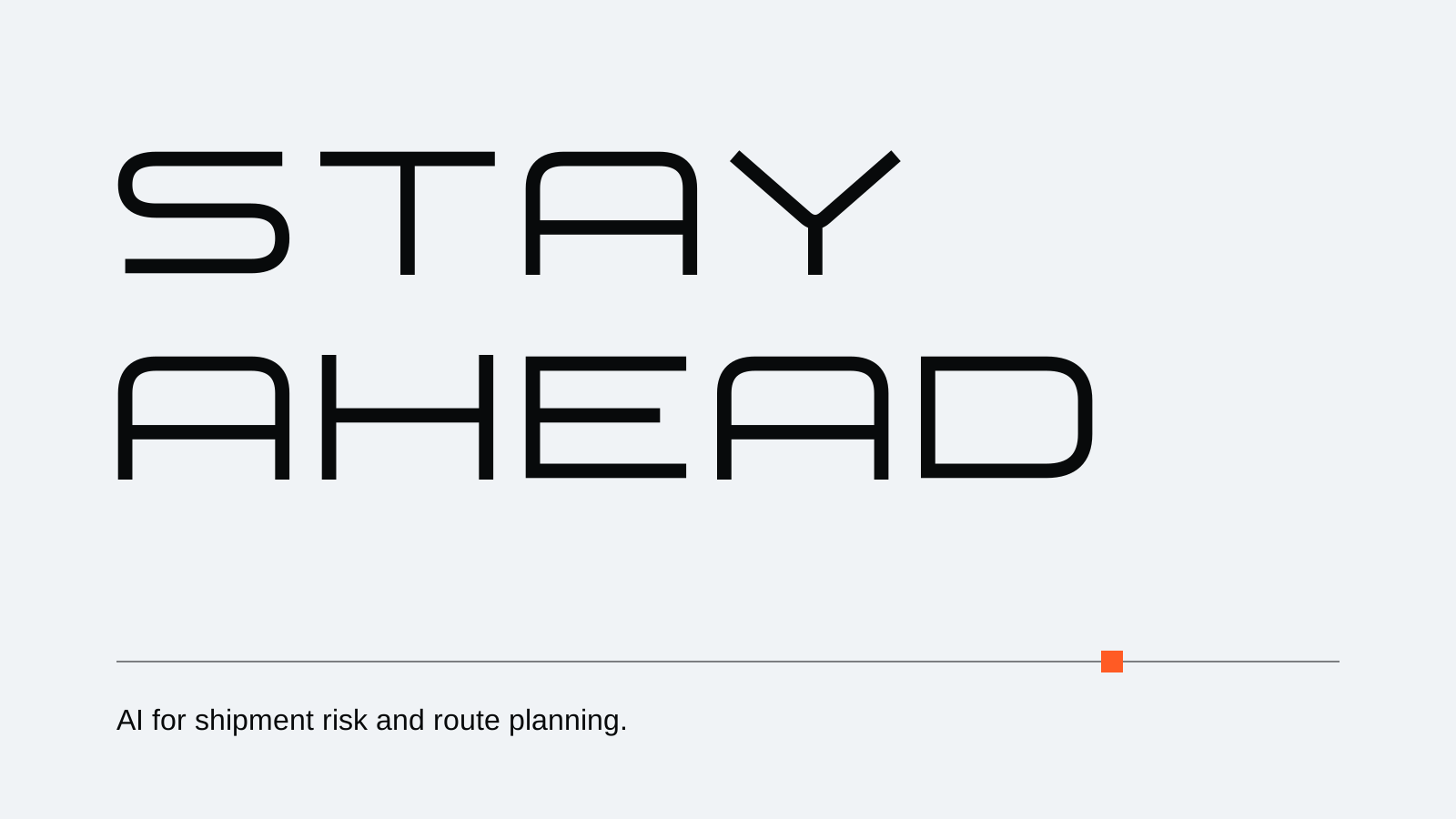
AI for shipment risk and route planning.
2026
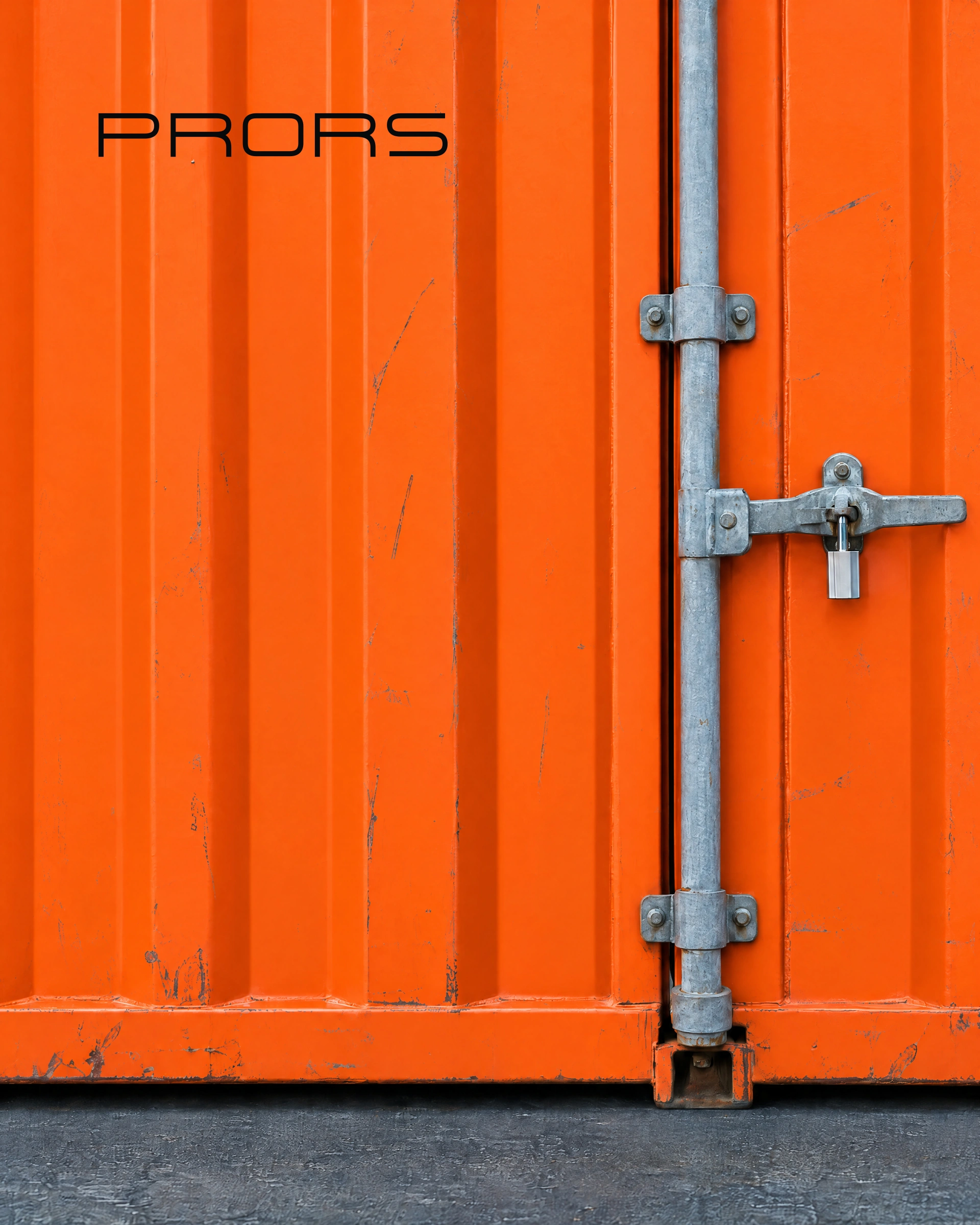
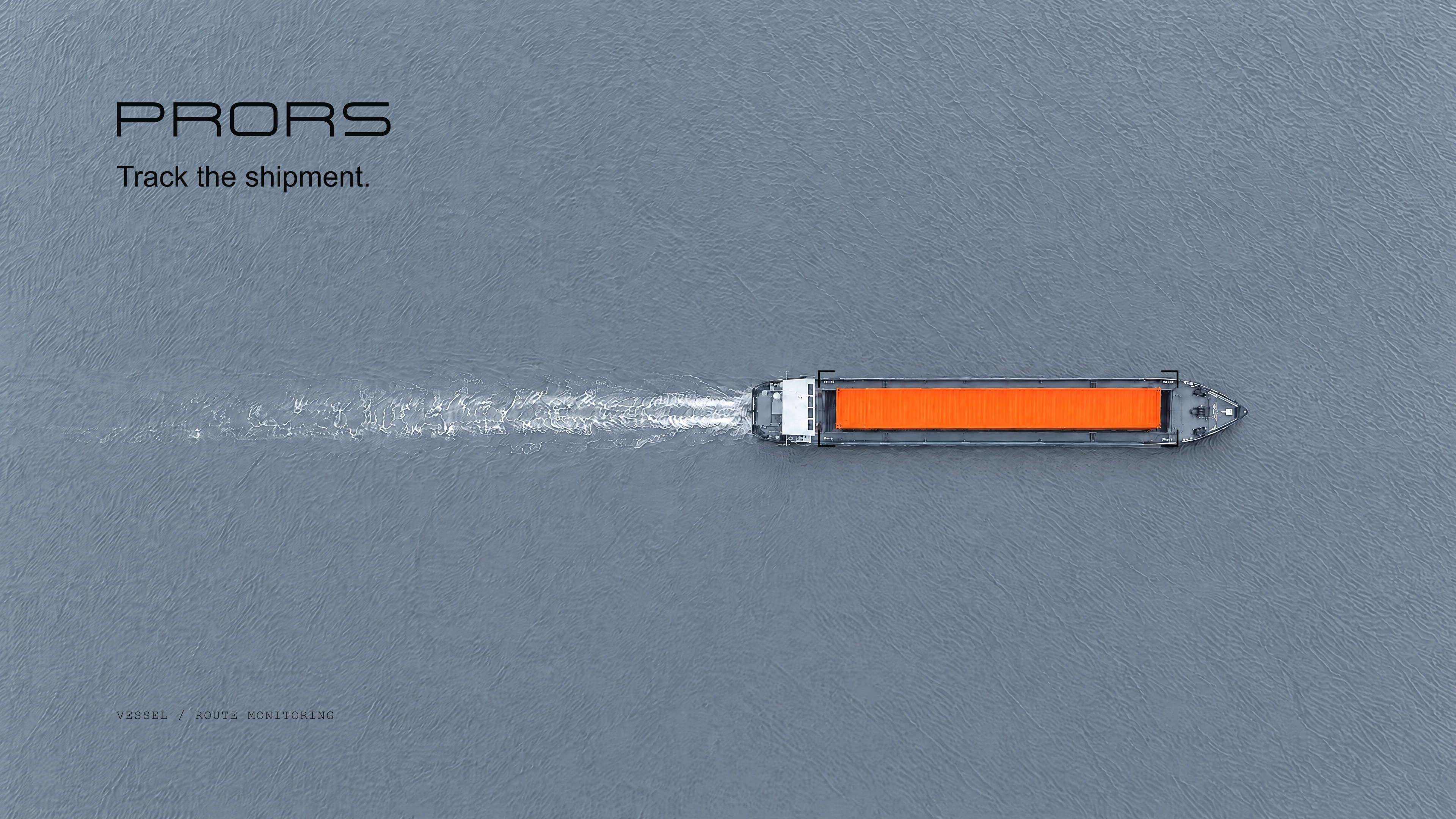
PRORS brings weather reports, port activity and vessel movements into one view, so a logistics team can see which shipments may need a different route. AI connects those signals to the cargo; a dispatcher reviews the options. The identity takes its starting point from that moment of attention: finding one shipment in a terminal full of similar containers.
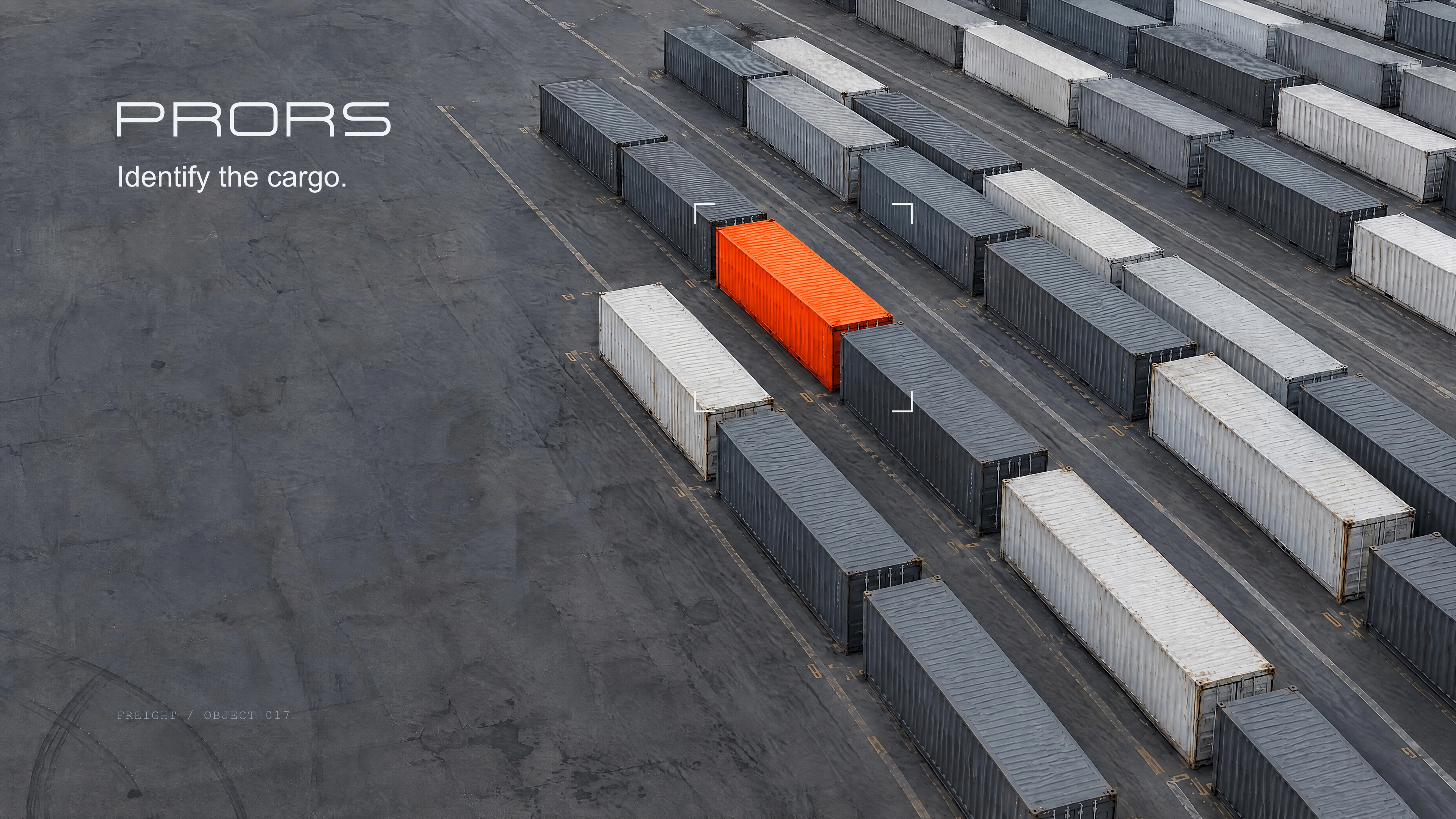
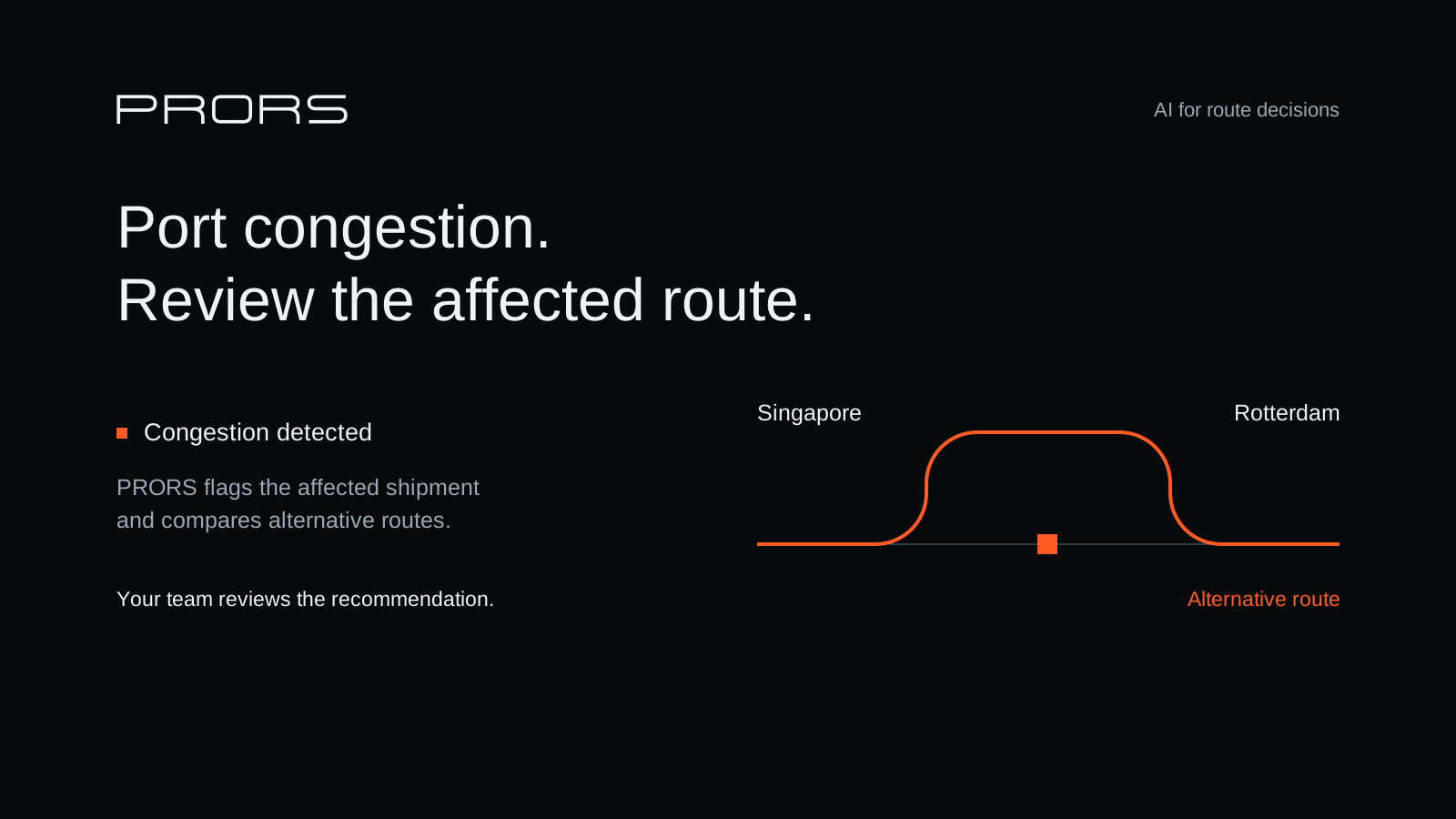
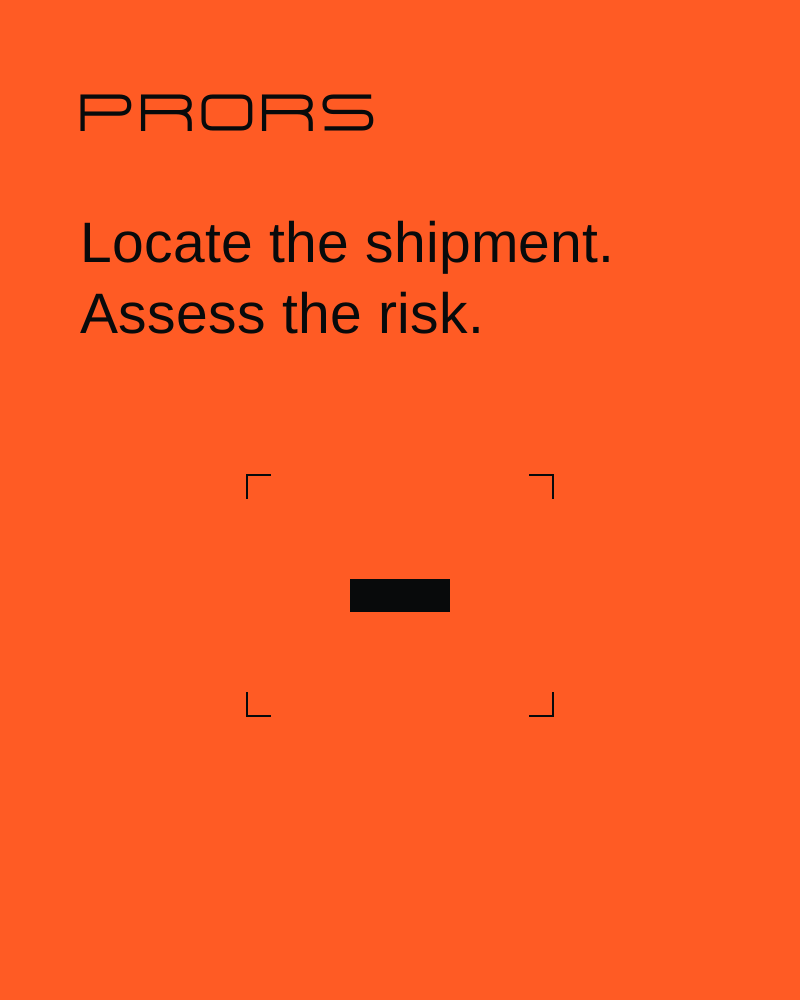
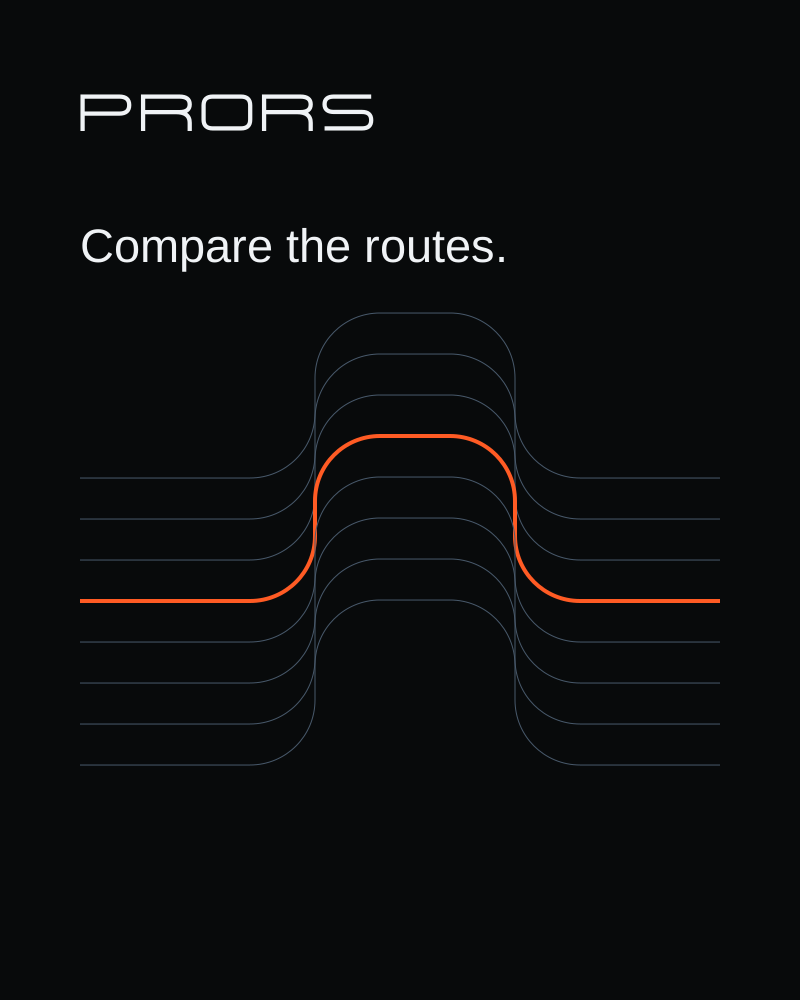
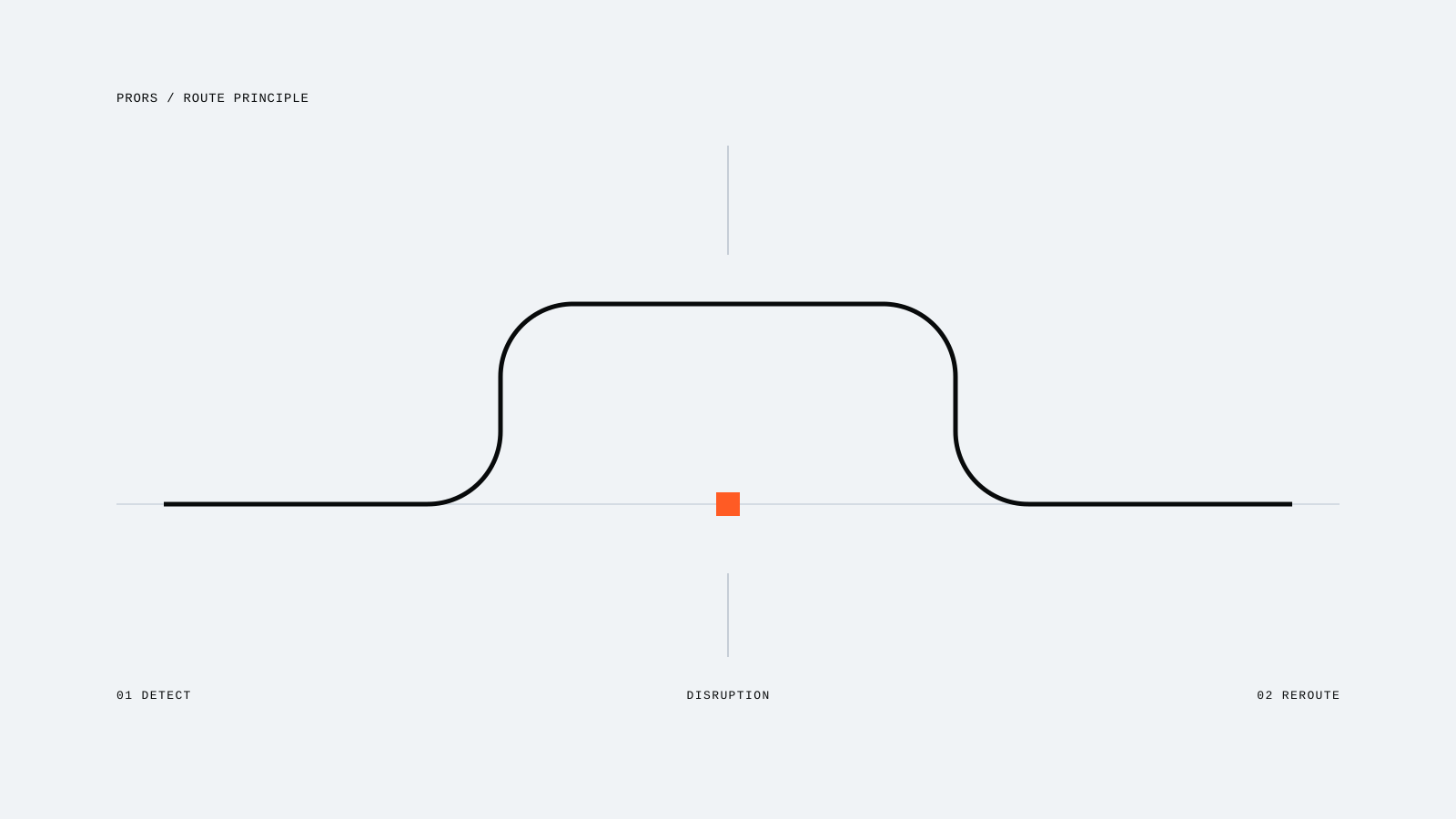
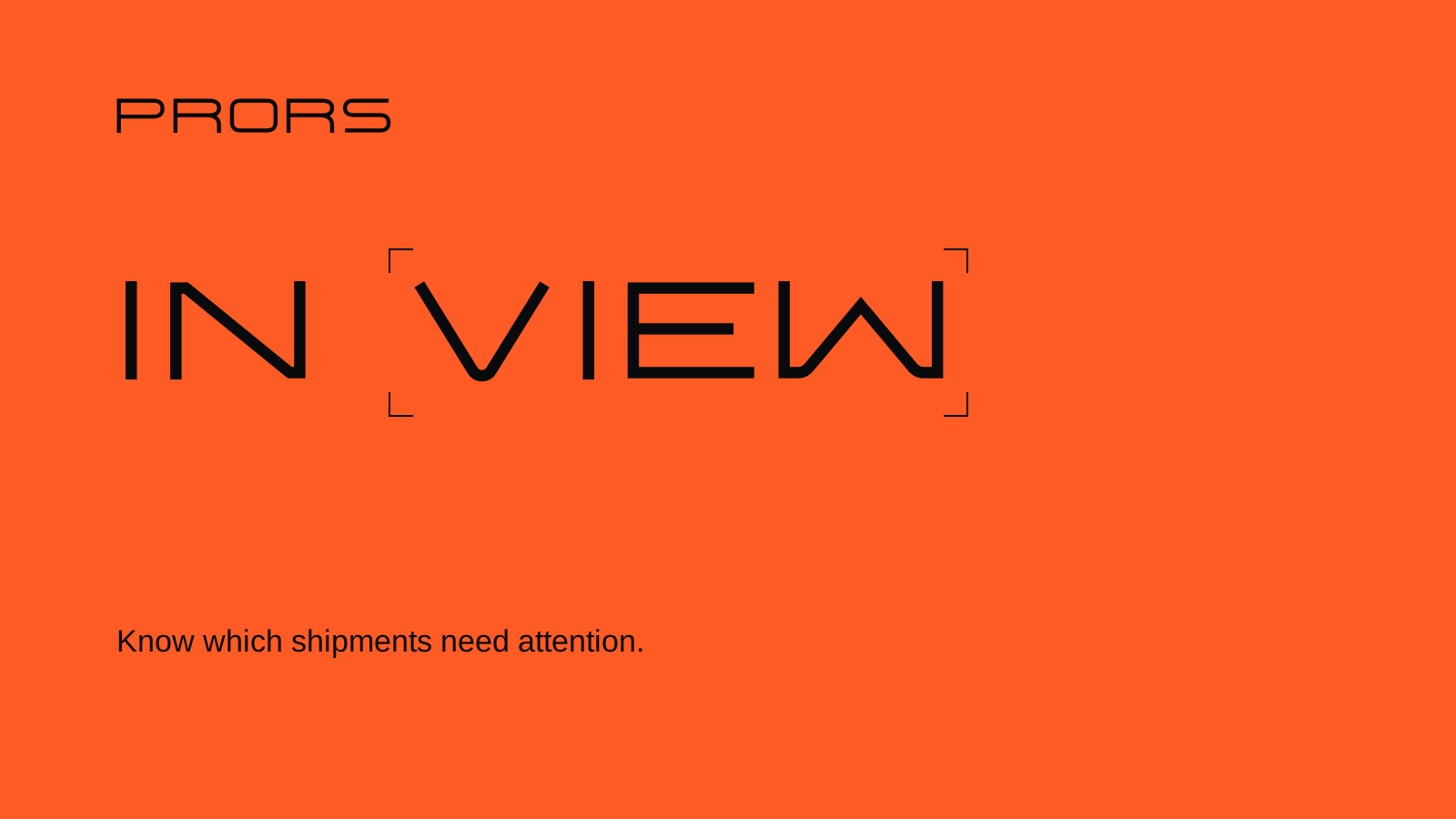
The frame moves first. Only when it settles on a container does the steel turn orange. That small delay gives the colour a purpose: it marks the shipment being reviewed. The same square appears in the route drawing, where the line bends around it. A search, a selection and a change of course all use the same few shapes.
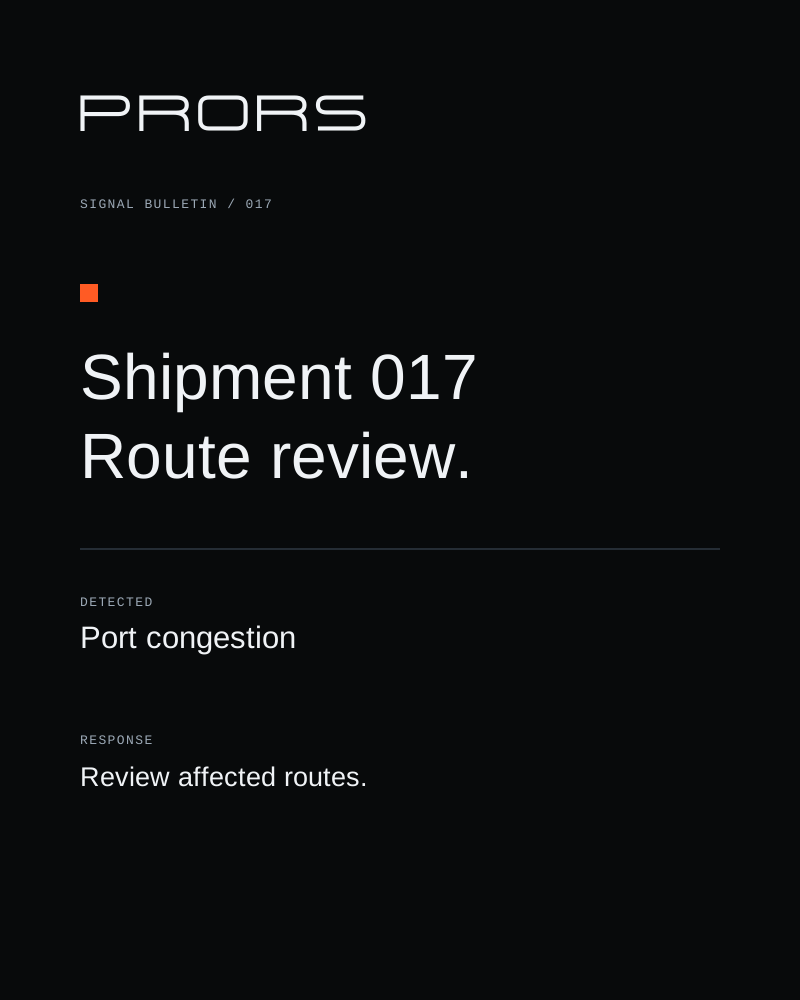
The documents follow shipment 017 from a warning at the terminal to a revised dispatch sheet. The shipment number stays in place while the route and status change. Large destination codes make the journey easy to find; smaller details sit below, in the order someone checking the cargo would need them.
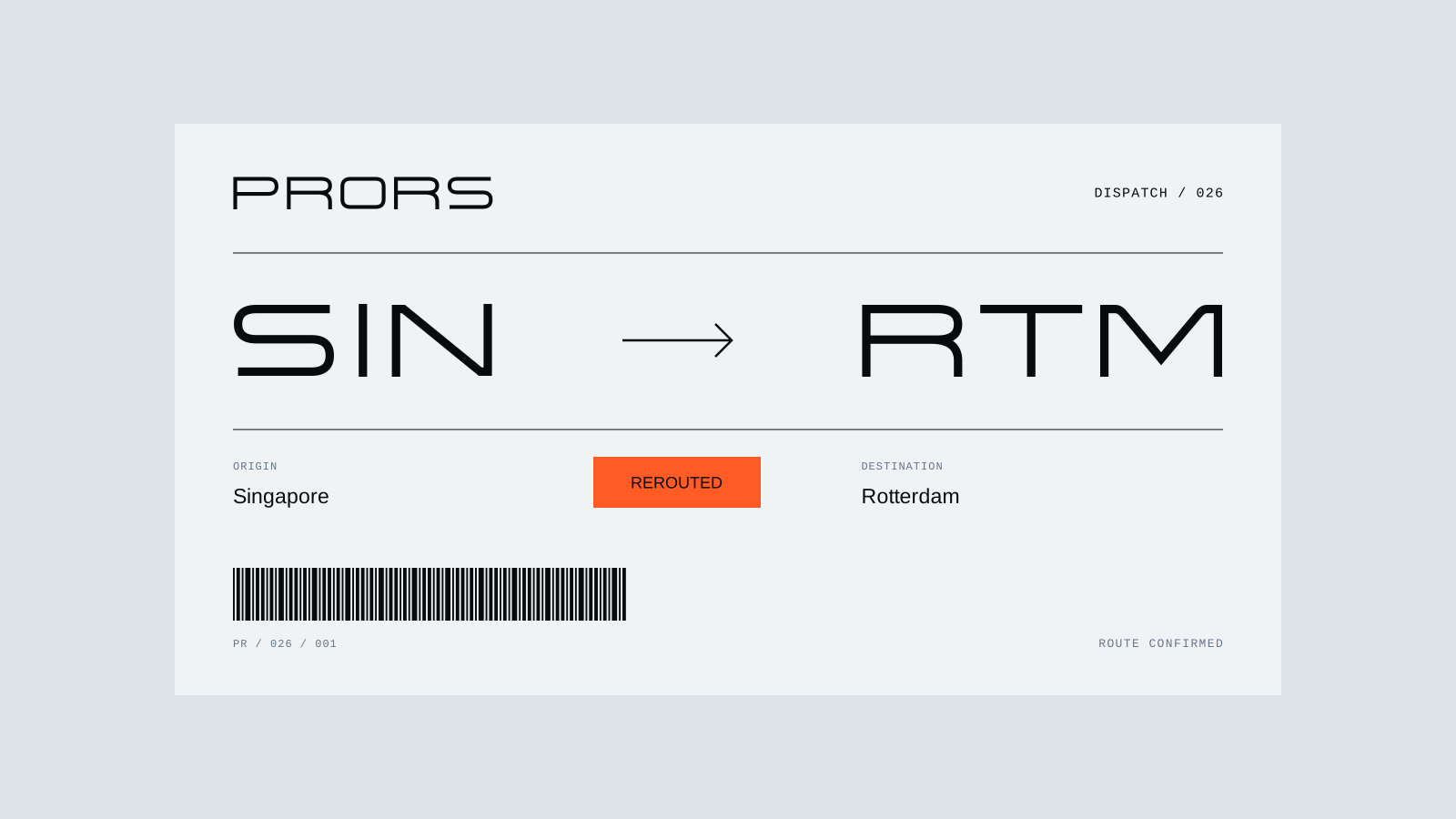
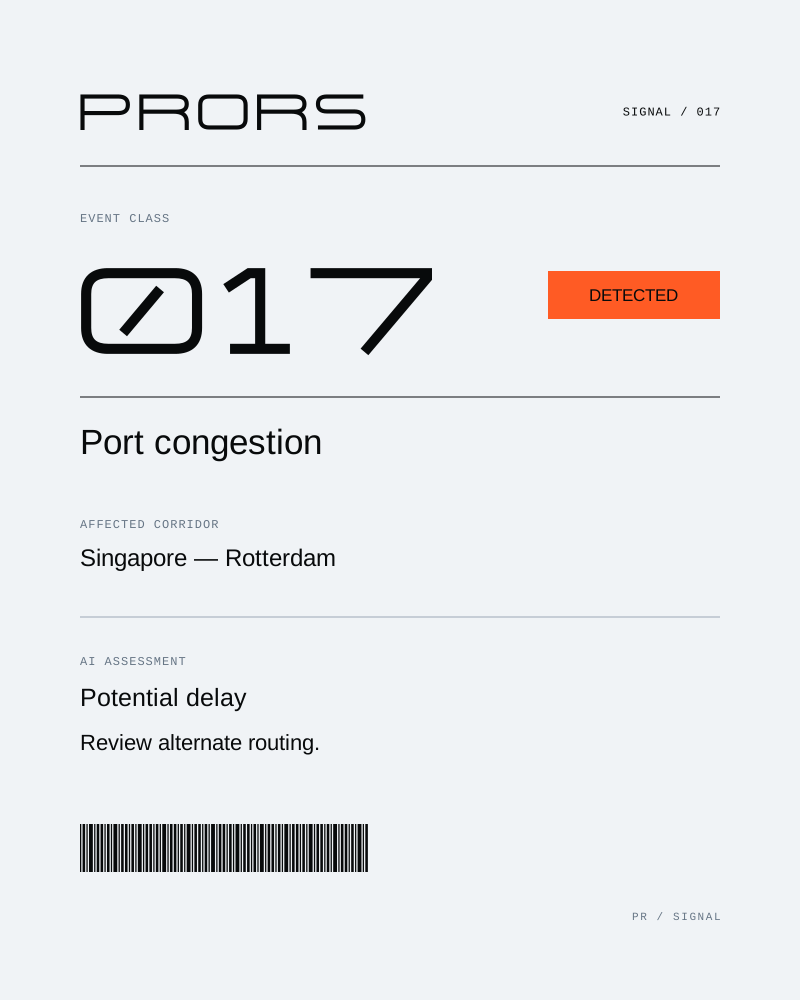
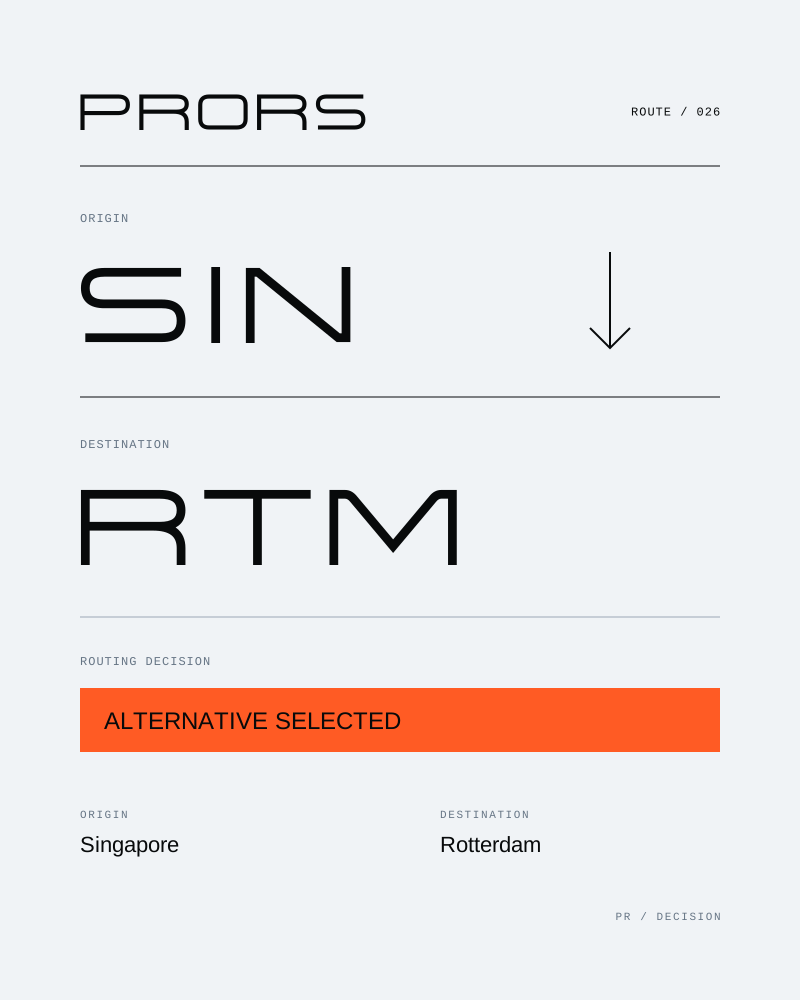
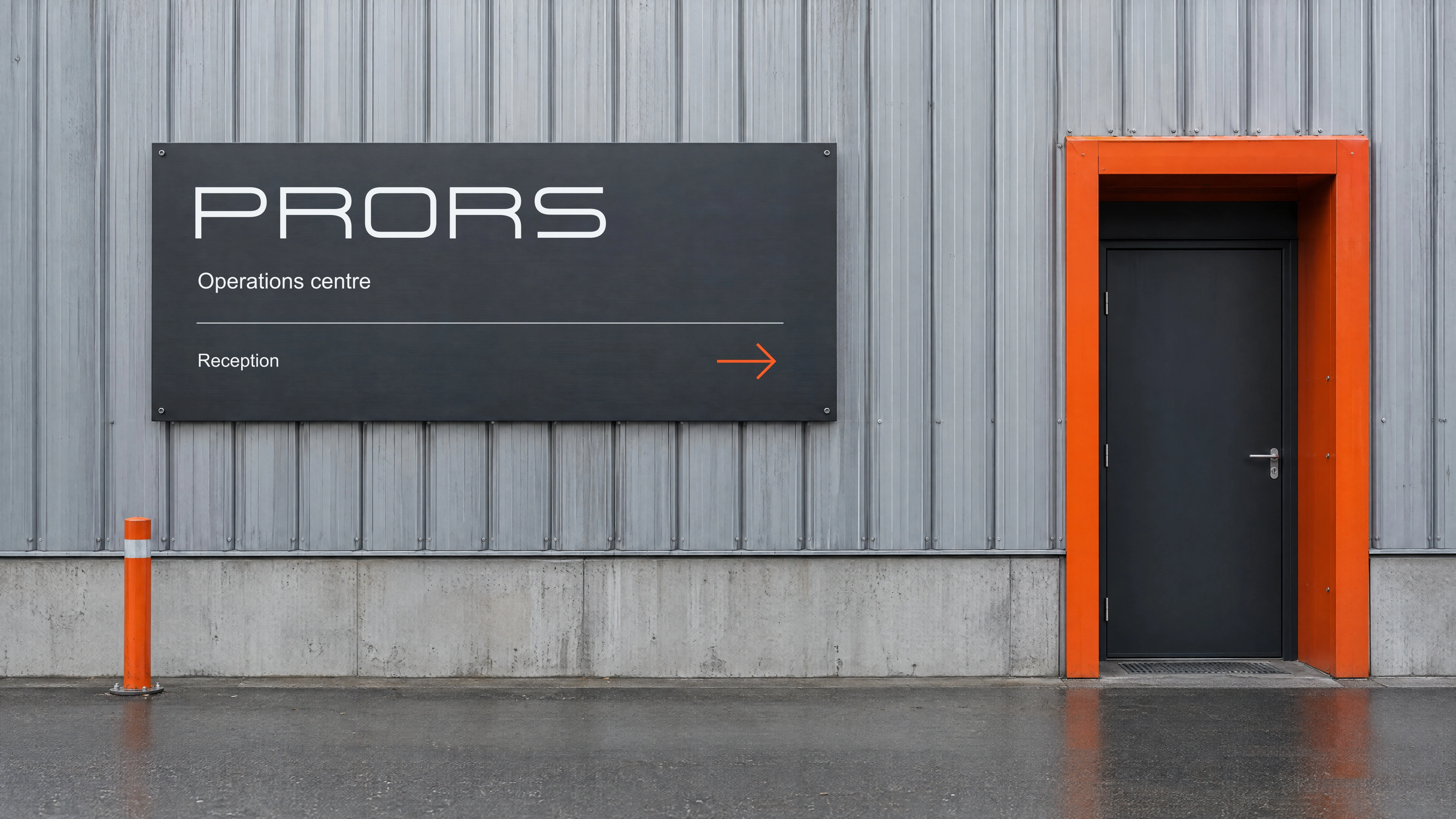
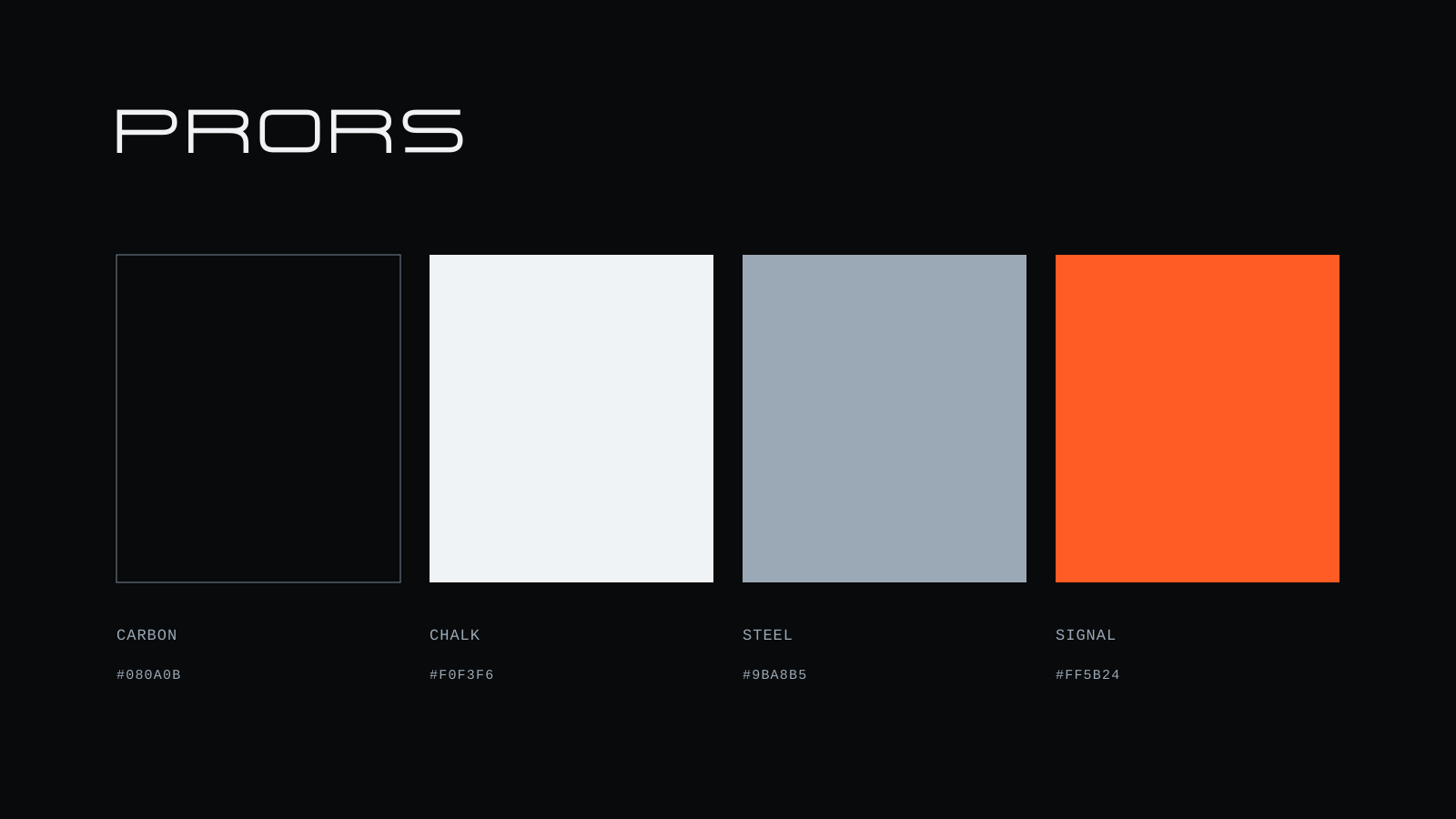
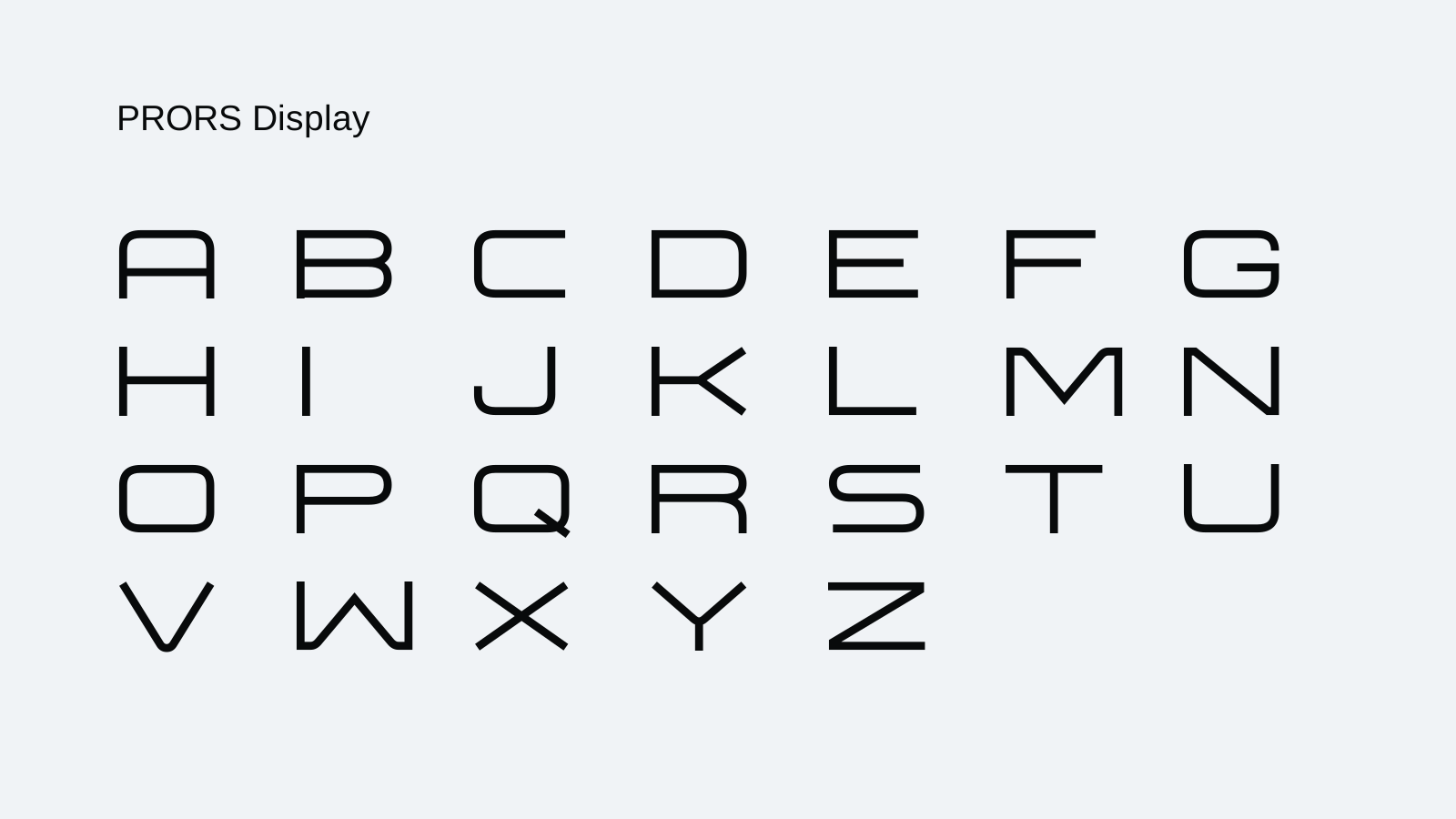
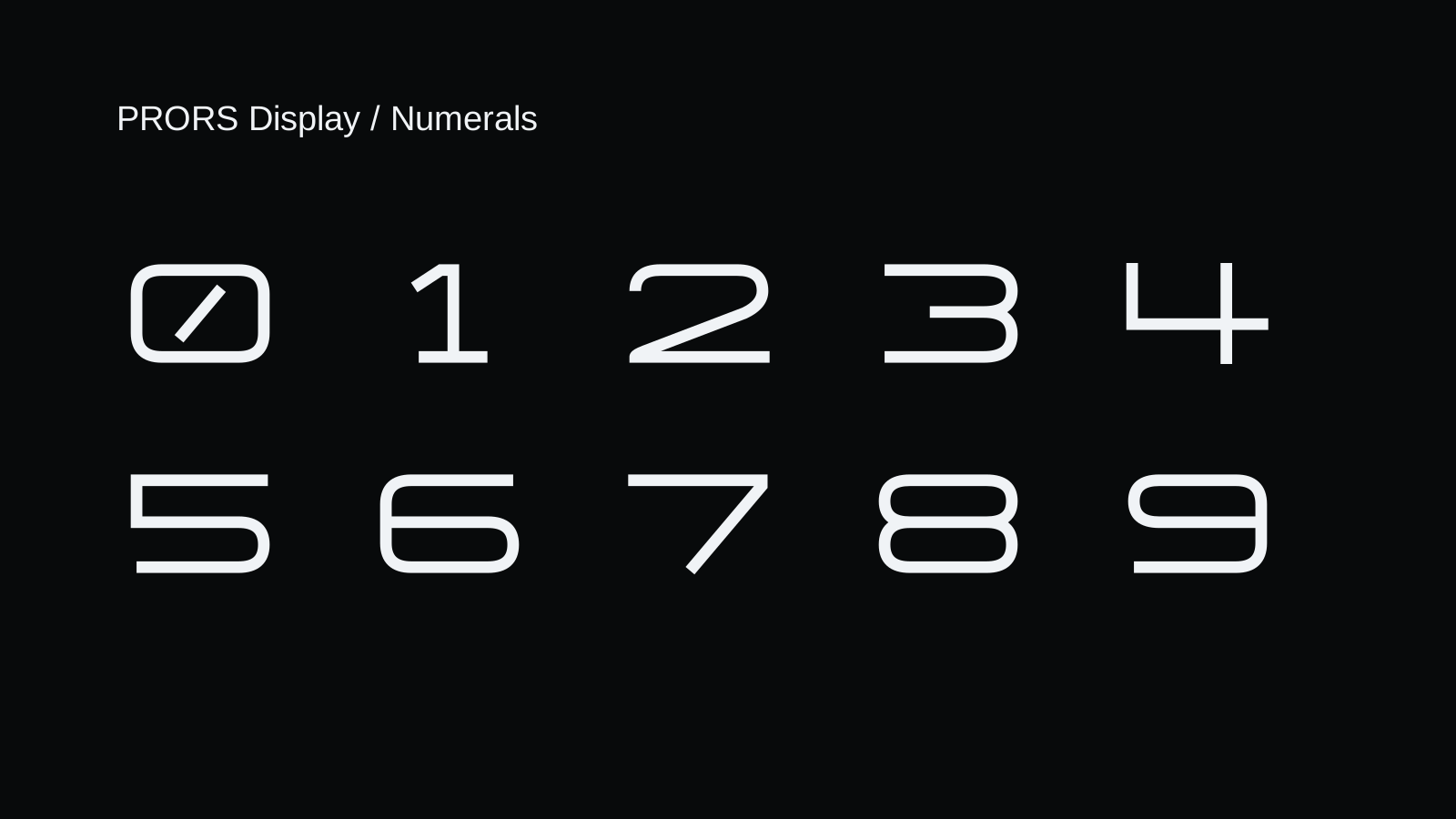
The wide lettering echoes the long sides and rounded corners seen throughout the identity. I kept the strokes light and opened the space between letters, so the name could sit quietly on a large photograph. The same alphabet carries the short route codes. Cool greys come from steel and water; orange picks out a container, a doorway or a changed status.
The R appears as a line drawing and as a metal form. Its outline separates into layers, then settles back into one letter. In the metal study, a slow turn lets the light describe the same curves. Both animations keep the letter intact, with enough space around it to see the full shape.
Self-initiated concept. Product scenarios are illustrative.